Categories
News

Tampa Museum of Art Welcomes “Frontiers of Impressionism: Paintings from the Worcester Art Museum”

Revolutionary Impressionist Works From the Worcester Art Museum’s Collection Make Their Southern Debut in the First Leg of an International Tour.

TAMPA, FL – The Tampa Museum of Art is thrilled to host Frontiers of Impressionism: Paintings from the Worcester Art Museum from September 28, 2023, to January 7, 2024. This breathtaking exhibition, which paints a vivid picture of the global expansion and influence of Impressionism, showcases 53 works by renowned artists—including Claude Monet, Pierre-Auguste Renoir, Camille Pissarro, Mary Cassatt, and more. Unique to the Tampa Museum of Art’s showing, many of these pieces will be displayed for the first time outside of the Worcester Art Museum in Massachusetts, offering visitors a fresh look at historic works.

“Presenting these impressionist masterpieces is a testament to art’s enduring ability to challenge and redefine conventions. Their significance transcends aesthetic appeal, offering Tampa Bay audiences a crucial education on how art breaks from tradition,” said Michael Tomor, the Penny and Jeff Vinik Executive Director of the Tampa Museum of Art. Tomor also noted, “Thanks to our recent gallery renovations, we are positioned better than ever to introduce larger-scale exhibitions, such as Frontiers of Impressionism, which enrich educational experiences for our community.”

Showcasing over 30 artists, the exhibition not only traces the roots of Impressionism in 19th-century France but also its expansion to Europe, the United States, and beyond. Visitors can immerse themselves in the groundbreaking artistic techniques, including the penchant for en plein air (outdoor) painting and the distinct brushwork that characterized the movement. A section of the exhibition takes a special look at the unique American rendition of Impressionism, from its manifestation in landscapes of the American West to its presence in New England. Frontiers of Impressionism offers a panoramic view of a movement that forever changed the world of art.

Thanks to the generosity of the presenting sponsor, Ferman Automotive Group, sustainer sponsor, the David A. Straz, Jr. Foundation, and community sponsors Dr. Robert and Susan Isbell, this exhibition promises an unmatched artistic experience for all attendees.

To delve deeper into the artworks, the Tampa Museum of Art will offer related programming, including docent-led tours and special events throughout the duration of the exhibition. For a full list of events and additional details, please visit TampaMuseum.org.

Frontiers of Impressionism is curated by Claire C. Whitner, the Worcester Art Museum’s Director of Curatorial Affairs and the James A. Welu Curator of European Art and Erin Corrales-Diaz, WAM’s former Assistant Curator of American Art. TMA’s presentation of Frontiers of Impressionism is coordinated by Joanna Robotham, Curator of Modern and Art. Following the exhibition’s Tampa Museum of Art dates, it will go on to the Tokyo Metropolitan Art Museum (January 26–April 7, 2024), followed by additional locations in Japan through the end of 2024.

###

Categories
News

Tampa Museum of Art Reopens on August 31 After Hurricane Idalia

Tampa, FL – The Tampa Museum of Art was fortunate to be spared some of the worst effects of Hurricane Idalia’s landfall in Florida. Unfortunately, other communities across the state were not so lucky. Our hearts go out to the individuals and communities who were impacted by the worst of the storm.

The Tampa Museum of Art will reopen and resume regular hours beginning Thursday, August 31, at 10 am. We invite anyone who lost power in Tampa Bay to find some tranquility in our exhibition galleries and use our free Wi-Fi or recharge cell phones in the Museum’s Vinik Family Education Center.

The museum thanks the City of Tampa and Hillsborough County teams that kept our community safe during this storm. Please continue following official communications from the City of Tampa or your local government regarding hurricane recovery efforts and the restoration of services and infrastructure.

General Hours and Information

For tickets and information, visit TampaMuseum.org or call (813) 274-8130. Located at 120 W. Gasparilla Plaza. Tampa, FL 33602, the Tampa Museum of Art is open seven days a week, Monday – Sunday, 10 am – 5 pm, and Thursdays from 10 am – 8 pm.  

###

Categories
Past Exhibitions

A Passion for Haitian Art: The Albrecht and Heller Collections

On view August 17, 2023 through March 17, 2024

Gerard Valcin (Haitian, 1925-1988), "La Combite", 1974. Oil on masonite. 45 x 36 inches. Tampa Museum of Art, Gift of the Arthur Albrecht Revocable Trust, TN.2022.079
Gerard Valcin (Haitian, 1925-1988), La Combite, 1974. Oil on masonite. 45 x 36 inches. Tampa Museum of Art, Gift of the Arthur Albrecht Revocable Trust, TN.2022.079
Frantz Zephirin, "La Sirene", 1990s. Oil on canvas. 49 1/4 x 25 1/8 inches. Kay & Roderick Heller.
Frantz Zephirin, La Sirene, 1990s. Oil on canvas. 49 1/4 x 25 1/8 inches. Kay & Roderick Heller.

The occupation of the Republic of Haiti by the US in the early part of the 20th-century lasted for more than three decades. By the time they left in the 1930s, after being mired in countless rebellions by the Haitian peasantry and a stiff opposition across the globe, Americans at home were well aware of the island to their south. Some of the cultural particularities of that nation piqued Hollywood’s interest and they did not miss on the salacious potential those unfamiliar customs could have on the public. Movies such as I Walked with a Zombie (1943) started a trend that to this day we cannot see its end, such as the international popularity of the television series The Walking Dead. Despite the cultural appropriation and misinterpretations of Haiti’s mystical traditions, the Caribbean Island captured the globe’s attention.

The opening of the Centre d’Art in Port-au-Prince in 1944 by an American conscientious objector and a handful of Haitian intellectuals attracted artists from all walks of life to its galleries and open air studios. Artists streamed to the Centre from Haiti’s urban and rural communities and caused an immediate sensation in the art world. Presented at first as intuitive and naïve, what the artists proposed was in fact their vision of their world as they lived and saw it. After three centuries as slave labor in sugar plantations in the French colony of St. Domingue, and after a hard won freedom where they fought the most advanced army of its day—the French Army under Napoleon, and the scorn this created in most advanced nations, they were at last free to try to recollect their memories. The paintings on view in this exhibition, created between the 1950s and 1990s, demonstrate how Haitians finally felt liberated in their ability to reconstruct what they had lost or had been forbidden for so long—to honor their gods, spirituality, and sacred traditions. Through the prism of slavery and its hardships, their visions offered something new if not fantastic.

All of this did attract attention and for a time Haiti was visited by many tourists, amongst them art enthusiasts who became passionate collectors. Their connoisseurship and support of Haitian art has benefitted the permanent collection of the Tampa Museum of Art, who now holds one the most formidable holdings of Haitian art in the US. The fact the Museum has in its holdings such a large number of excellent works of art from their neighbor to the south enables visitors, as well as the many transplanted Haitians in the region, to grasp and admire a complex history through art and the spirit of Haiti.

A Passion for Haitian Art: The Albrecht and Heller Collections is presented in conjunction with Reframing Haitian Art: The Arthur Albrecht Collection and curated by Edouard Duval Carrié, guest curator.

About the Collectors

A Passion for Haitian Art: The Albrecht and Heller Collections and Reframing Haitian Art: The Arthur Albrecht Collection in the adjacent gallery present luminary artists frequenting the Centre d’Art since in its beginnings in the late 1940s, as well as second- and third-generation artists of the organization. Even though many of them are not strictly affiliated with the Centre, most had their beginnings there and moved onward. Collectors traveling to Haiti not only visited the Centre but other art galleries that sprung up in Port-au-Prince. A Passion for Haitian Art: The Albrecht and Heller Collections highlights two collections acquired over a similar period yet housed on opposite coasts of the US.

The Arthur Albrecht Collection, San Francisco, California

In 2022, the Arthur Albrecht Revocable Trust gifted the Tampa Museum of Art a collection of 20th-century masterworks by Haitian artists. The Albrecht Collection, comprised of 89 paintings and sculptures, and 55 pieces of related support materials, is one of the most esteemed collections of modern Haitian art and has never been on view to the public until today. Arthur Albrecht (1927–2018) was an avid collector with a deep love for Haiti. He lived with this collection in his home on San Francisco’s famed Lombard Street. Although much of his connection to Haiti and its artists is unknown, his collecting interests focused primarily on the first- and second-generation artists associated with the Centre d’Art, Haiti’s premier art school and visual art center. The collection had not left private hands until now and the paintings and sculptures were in need of care and conservation. With grant funds from the Bank of America Art Conservation Project, the Museum was able to clean and restore the collection nearly to the objects’ original condition. As seen in this gallery, conservation care revealed the pristine quality of line, form, and color that heralds this group as master artists.

The Kay and Roderick Heller Collection, Tampa, Florida and Franklin, Tennessee

Kay Culbreath Heller has Haiti in her heart. Her involvement with the island started when she worked at Hospital Bon Samaritain with Dr. William Hodges and his family in the remote small town of Limbé in northern Haiti. The art of Haiti caught her eye and imagination, and she once wrote, “Nothing prepared me for the life and vitality of Haiti.” With Beverly Sullivan of Washington, Kay found ways to promote the artists through large fundraisers and art sales stateside benefitting Haitian medical, arts, and humanitarian organizations. In 2000, Kay co-curated the first exhibition of Haitian art at the Tampa Museum of Art entitled Island Delights: The Spirit and Passion of Haitian Art.

This passion for Haiti extended to Roderick Heller, a distinguished lawyer and preservationist from Washington, DC who has employed his academic rigor to an all-encompassing project on Haiti’s art. He is assembling a catalogue raisonné of his favorite Haitian artist, Rigaud Benoit, one of the initial group of artists who joined the Centre in its early days. This is not an easy task as works of art by this artist and others are today scattered all over the world. The Hellers’ goal through international research is to help illuminate the artistic legacy and creativity of Haiti and its people.

Funds for the conservation of the Arthur Albrecht Collection were generously provided through a grant from the Bank of America Art Conservation Project

Bank of America
Categories
Past Exhibitions

Garry Winogrand: Women are Beautiful

On view August 5, 2023 through April 21, 2024

Garry Winogrand (American, 1928-1984), "Centennial Ball, Metropolitan Museum, New York" from "Women are Beautiful" portfolio, 1969. Gelatin silver print. Tampa Museum of Art. Gift of Mr. and Mrs. John Osterweil, 1984.074.039. © The Estate of Garry Winogrand, courtesy Fraenkel Gallery, San Francisco.
Garry Winogrand (American, 1928-1984), Centennial Ball, Metropolitan Museum, New York from Women are Beautiful portfolio, 1969. Gelatin silver print. Tampa Museum of Art. Gift of Mr. and Mrs. John Osterweil, 1984.074.039. © The Estate of Garry Winogrand, courtesy Fraenkel Gallery, San Francisco.

A celebrated artist, Garry Winogrand transformed the genre of street photography in the 1960s. With his Leica camera in hand, he captured the movements, both hurried and introspective, and raw emotions of his subjects. Initially published as a monograph, the portfolio Women are Beautiful (1975) represents Winogrand’s most significant project. Comprised of 85 photographs, the series features women engaged a range of ordinary activities –walking across the street, enjoying a conversation, and dancing in a crowd. Some of the photos are direct, with the woman walking straight towards Winogrand’s lens, while others reveal the photographer observing quiet moments of solitude.

In the early 1980s, the Tampa Museum of Art established photography—with an emphasis on work created after 1970—as a primary collecting area. The collection now comprises more than 950 photographs and demonstrates how the medium evolved throughout the 20th-century. TMA’s photography collection includes works by John Baldessari, James Casebere, and Cindy Sherman, as well as the candid photographs of Henri Cartier-Bresson, Andy Warhol, and Winogrand.

This exhibition is sponsored by David Hall and Judy Tampa

Categories
Past Exhibitions

Pepe Mar: Myth and Magic

On view July 13, 2023 through May 19, 2024

Installation view of "Pepe Mar: Myth and Magic" at the Tampa Museum of Art. Photography by Zachary Balber.
Installation view of Pepe Mar: Myth and Magic at the Tampa Museum of Art. Photography by Zachary Balber.
Installation view of "Pepe Mar: Myth and Magic" at the Tampa Museum of Art. Photography by Zachary Balber.
Installation view of Pepe Mar: Myth and Magic at the Tampa Museum of Art. Photography by Zachary Balber.

Pepe Mar: Myth and Magic represents the first survey of Pepe Mar’s art and highlights 15-years of the artist’s practice, from 2006 to 2023. Presented as a Gesamtkunstwerk, the exhibition itself has been conceptualized as an immersive artwork with the objects on view complemented by the artist’s vibrant fabric walls, plush poufs for sitting, and lush orange carpet. Each work is uniquely different yet incorporates Mar’s signature materials—such as paper cut-outs from magazines, catalogues, and books, decorative textile motifs, clay vessels and figurines, as well as found objects discovered by the artist in shops and thrift stores throughout the world.

Mar opens the exhibition with a sculpture garden and introduces the figure “Paprika,” the artist’s alter ego. Paprika anchors Mar’s work and represents the personal and the Other, as well as the fusion of medium and object. Loosely chronological, Pepe Mar: Myth and Magic is organized by concepts and processes present in Mar’s oeuvre: Assemblage, Revival and Mythologies, Face-Off, and Fabric Paintings. Assemblage examines personal and social identities as well as Queer aesthetics. Revival and Mythologies explores the artist as collector and ethnographer. In this section, the magnum opus The Cabinet of Dr. Mar highlights visual traditions and personal lore. The grid of collages entitled Face-Off illustrates Mar’s approach to portraiture, masking, and explorations of self. Fabric Paintings serve as an archive of the artist’s past works with sculptures, assemblages, and photographs transformed into colorful textiles.

Pepe Mar: Myth and Magic features 60 works of art from public and private collections across the United States, including Burning Up, a collage sculpture acquired by the Tampa Museum of Art in 2019 that served as the inspiration for this survey exhibition. The title of the exhibition pays homage to the 1979 exhibition of Mexican master painter Rufino Tamayo entitled Rufino Tamayo: Myth and Magic, organized by the Solomon R.Guggenheim Museum in New York City. While the works on view highlight Mar’s influences—art history, Mexican artifacts and architecture, fashion, science fiction, and pop culture—the exhibition also speaks to the artist’s biography. Living between the border of the US and Mexico, and later establishing roots in Miami, Florida, the art on view reveals the connections between self and site, and material as metaphor. As seen in Pepe Mar: Myth and Magic, the works from the past 15 years reflect the evolution of an artist, as well as a transformative return to his creative roots.

The accompanying catalogue Pepe Mar: Myth and Magic will be published in Fall 2023.

Installation view of "Pepe Mar: Myth and Magic" at the Tampa Museum of Art. Photography by Zachary Balber.
Installation view of Pepe Mar: Myth and Magic at the Tampa Museum of Art. Photography by Zachary Balber.
Installation view of "Pepe Mar: Myth and Magic" at the Tampa Museum of Art. Photography by Zachary Balber.
Installation view of Pepe Mar: Myth and Magic at the Tampa Museum of Art. Photography by Zachary Balber.

About the Artist

Born in 1977 in Reynosa, Mexico, close to the Mexico/United States border, Pepe Mar spent his childhood living between two cultures. His family moved to Brownsville, Texas during Mar’s teenage years and he started making art in his family’s garage. As a young artist, he purchased inexpensive materials such as feathers and beads from craft stores such as Michael’s. He received his BFA from the California College of the Arts in San Francisco and earned his MFA from Florida International University in Miami.

Mar has received several prominent grants, including an Ellies Award from Oolite Arts in 2020 and 2018. Solo exhibitions have been mounted at the Kemper Museum of Contemporary Art, Kansas City, MO (2022); Frost Art Museum at FIU (2020), Miami, FL; Mattress Factory, Pittsburgh, PA (2019); and Locust Projects, Miami, FL (2018). In Fall 2023, a solo exhibition of Mar’s work will be presented at the Everson Museum in Syracuse, NY. Mar is represented by David Castillo. The artist lives and works in Miami, Florida.

Pepe Mar: Myth and Magic is funded by The Ellies, Miami’s visual arts awards, presented by Oolite Arts.

Oolite Arts

Sponsors:

Dr. Charles Boyd, David Castillo, Elizabeth Dascal Spector & Vladimir Spector, Leslie & Gregory Ferrero, Amy & Harry Hollub, Alexa & Adam Wolman

Publication Sponsors:

The Breathe Project, Daphna & Ariel Bentata, Carmen Amalia Corrales, Cecilia & Ernesto Poma, Clara & Juan Toro, Arlyne & Stephen Wayner, Clay Blevins, Jacqueline Chariff

Supported in part by:

Tampa Museum of Art Foundation
Culture Builds Florida - Florida Department of State - Division of Arts & Culture
Categories
News

Tampa Bay Arts Education Network: Time For Change: Art and Social Unrest in the Jorge M. Pérez Collection

Watch the Tampa Bay Arts Education Network “Art Perspectives” episode about the exhibition, “Time for Change: Art and Social Unrest in the Jorge M. Pérez Collection” featuring Tampa Museum of Art Curator of Modern & Contemporary Art, Joanna Robotham.

Categories
News

Call to Artists Announced for Tampa Bay Area Exhibition ‘Skyway 2024: A Contemporary Collaboration’

Exhibition to be held at five partnering institutions: Museum of Fine Arts, St. Petersburg; The John and Mable Ringling Museum of Art; Sarasota Art Museum; Tampa Museum of Art; and USF Contemporary Art Museum

TAMPA, Fla., June 20, 2023 – Five regional art museums, the Museum of Fine Arts St. Petersburg, The John and Mable Ringling Museum of Art, the Tampa Museum of Art, the Sarasota Art Museum of Ringling College of Art and Design, and the USF Contemporary Art Museum, are pleased to announce a call to artists for Skyway 2024: A Contemporary Collaboration, the third iteration of the exhibition celebrating the diversity and talent of artistic practices in the Tampa Bay area. This is an open call to artists and art collectives residing in Hillsborough, Manatee, Pasco, Pinellas, and Sarasota counties to submit application materials for the exhibition, which will be presented across the five participating art institutions during the spring, summer, and fall of 2024. The five art institutions will co-publish a fully illustrated catalogue to accompany the exhibition featuring the work of each exhibiting artist.

The call to artists submission period begins on June 20, with a deadline of August 4, 2023. Artists working in diverse media and disciplines, including socially engaged art and participatory projects, are encouraged to submit original artworks and project proposals. Submissions can include, but are not limited to, work on paper, painting, sculpture, photography, video, performance, sound, research-based art, and site-specific installations. Submissions can include examples of works and past projects that provide an overview of the artist’s practice. Only original works of art completed after December 2020 will be considered for the exhibition in 2024.

Artworks and projects in the exhibition will be selected by an expanded curatorial team from the five participating art institutions, including Christopher Jones, Stanton B. and Nancy W. Kaplan Curator of Photography and Media Arts and Ola Wlusek, Keith D. and Linda L. Monda Curator of Modern and Contemporary Art, from The John and Mable Ringling Museum of Art; Katherine Pill, Senior Curator of Contemporary Art, Museum of Fine Arts, St. Petersburg; Rangsook Yoon, Senior Curator, Sarasota Art Museum; Joanna Robotham, Curator of Modern and Contemporary Art, Tampa Museum of Art; and Christian Viveros-Fauné, Curator-at-Large, USF Contemporary Art Museum. Curator, writer, and scholar, Evan Garza, is the guest juror for Skyway 2024. Currently a Curatorial Fellow at the Massachusetts Museum of Contemporary Art, Garza was a recent Fulbright Scholar at The Irish Museum of Modern Art in Dublin, Ireland, and served as co-curator and artistic director of the 2021 Texas Biennial. Garza co-founded Fire Island Artist Residency (FIAR), a New York nonprofit and the first residency program in the world exclusively for LGBTQ+ artists. 

Additional information and submission guidelines can be found at skywaytampabay.com

Categories
Centennial Campaign News

Tampa Museum of Art Announces $100,000 Grant From Bank of America for Support of Recent Haitian Art Acquisition

Andre Pierre (Haitian, b. 1914), Erzulie, 1973. Oil on canvas. 37 x 26 inches. Tampa Museum of Art, Gift of the Arthur Albrecht Revocable Trust.
André Pierre (Haitian, b. 1914), Erzulie, 1973. Oil on canvas. 37 x 26 inches. Tampa Museum of Art, Gift of the Arthur Albrecht Revocable Trust.

TAMPA, Fla. – The Tampa Museum of Art has been awarded a $100,000 grant from Bank of America for the conservation of its recent acquisition of Haitian art. The collection consists of paintings, sculptures, and framed maps bequeathed to the Tampa Museum of Art by the Arthur R. Albrecht Revocable Trust last August. Albrecht was a devoted collector of Haitian art and was also active in philanthropy on behalf of the country.

“This grant by Bank of America is an example of how businesses can collaborate with the arts to preserve rich cultural heritage,” said Michael Tomor, Ph.D., the Penny and Jeff Vinik Executive Director at the Tampa Museum of Art. “We are always in pursuit of opportunities to work with private institutions to ensure these works can be enjoyed for generations to come.”

At the time of the acquisition, the Museum also received a $1 million endowment gift from the Albrecht Trust in support of the collection and programming. The new $100,000 grant from Bank of America will go toward preservation projects and allow for a larger portion of the Albrecht Trust to be used for educational programming related to the newly acquired artwork.

“The private sector has a role to play in keeping the arts thriving in our communities, which is why we partnered with the Tampa Museum of Art to help preserve the historical and cultural impact of this art,” says Bill Goede, president, Bank of America Tampa Bay. “We believe that investments in arts and culture help to build our Tampa Bay community and have a positive impact on the lives of our clients and employees. We are committed to preserving these pieces that celebrate Tampa’s strong Haitian population.”

This support is part of Bank of America’s Art Conservation Project (ACP), a unique program through which the bank provides grant funding to nonprofit museums and cultural institutions around the world to help conserve historically or culturally significant works of art that are in danger of deterioration. Since it began in 2010, Bank of America has funded the conservation of individual pieces of art through more than 237 projects in 40 countries across six continents, conserving paintings, sculptures, and archaeological and architectural pieces that are critically important to cultural heritage and the history of art.

The combined gifts and grants accompanying the collection complement ongoing fundraising efforts by the Museum’s Centennial Campaign for Renovation and Expansion. The Museum completed renovations of the Vinik Family Education Center last summer, growing the education space from 1,400 to 8,000 square feet, including four classrooms, a lobby, orientation spaces, and a secure entrance. With these improvements in place, the Museum anticipates quadrupling the number of students it serves per year, and the school tour program alone can grow from 6,000 students to 24,000 each year.  

In 2021, the Museum announced it was embarking on its $100 million+ Centennial Renovation and Expansion to expand the Museum’s gross area from 69,000 to 125,000 sq. ft. On April 26, the Museum celebrated the completion of its renovations, with all exhibitions in new gallery spaces open to the public.

See some of the artwork that recently underwent conservation in the exhibition Reframing Haitian Art: Masterworks from the Arthur Albrecht Collection on view now through May 2024.

###

Categories
Centennial Campaign News

Tampa Museum of Art’s Centennial Renovation Celebrated with the Opening of Seven New Exhibition Spaces

YouTube player

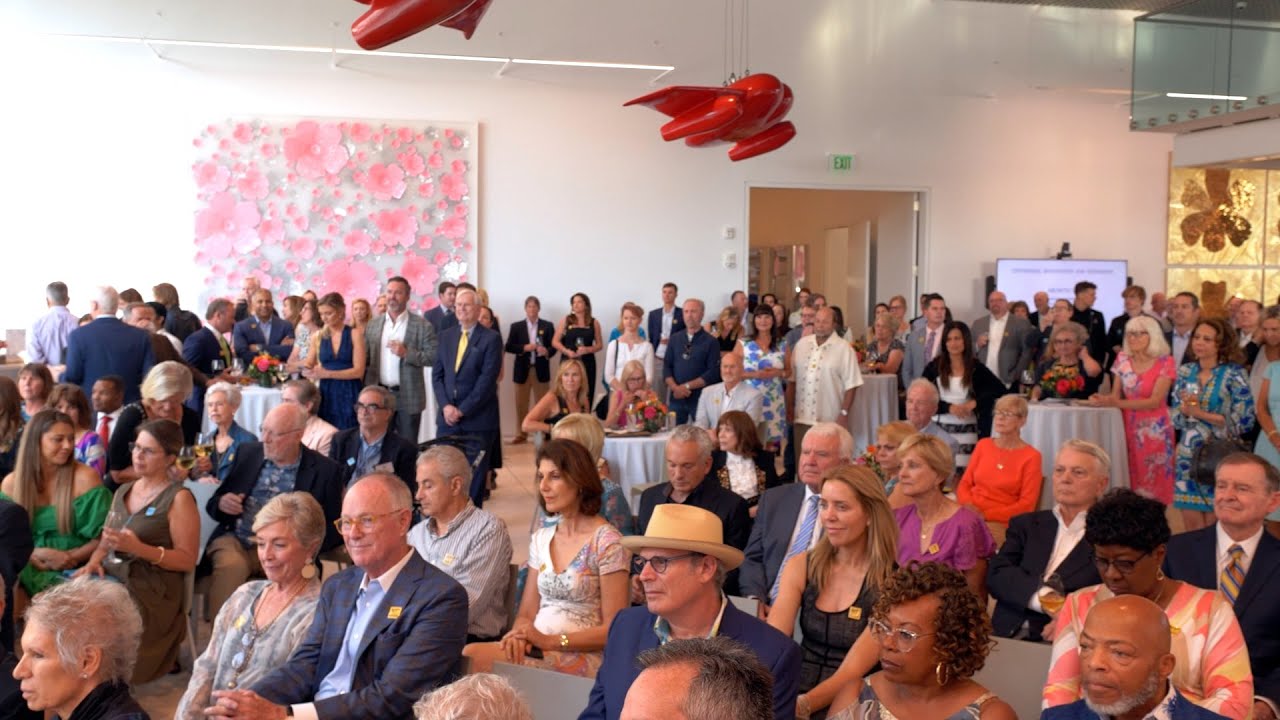
Tampa, FL – The Tampa Museum of Art is thrilled to announce the official opening of seven new exhibition spaces. Last evening, during the Museum’s Renovation Celebration, Tampa Bay’s leaders, Museum benefactors and members gathered to mark the conclusion of the Museum’s Centennial Renovation project phase, which began construction in mid-2021. The new spaces include the transformation of underused storage rooms into the Vinik Family Education Center and seven new exhibition galleries. The spaces are designed by New York-based WEISS/MANFREDI Architecture/Landscape/Urbanism, the firm also responsible for the expansion of the existing museum building.

With the completion of the renovation phase of the Centennial Renovation and Expansion, the museum’s exhibition and collection space has grown from 14,800 square feet to more than 43,000 square feet, including a renovated sculpture gallery on the first floor, and a flexible multimedia gallery space on the second floor. The lobby of the existing building has been remodeled into a sculpture atrium, making art the focus of the visitor experience immediately upon entering the building.

The education spaces, now known as the new Vinik Family Education Center, have also grown from 1,400 square feet to more than 8,000 square feet. The Vinik Family Education Center began offering classes in May 2022 and includes four classrooms, a lobby, orientation space, and a ceramics kiln. To date, the Vinik Family Education Center has served over 12,000 adults, children and teens through camps, studio classes, tours, art therapy-informed programs and more. 

“The Renovation Celebration marks the beginning of an exciting new chapter for the Tampa Museum of Art,” said Michael Tomor, the Tampa Museum of Art’s Penny and Jeff Vinik Executive Director. “With our expanded exhibition and education spaces, we are thrilled to be able to showcase the diverse work of so many talented artists and offer more programming to our visitors. We look forward to continuing to represent the vibrant community that we serve.”

As part of the realignment of space, WEISS/MANFREDI designed a new transparent façade surrounding the first floor of the Museum, allowing the community to experience the Museum’s mission 365 days a year. This new façade, along with the expanded museum store, atrium galleries and new west lobby, align with an important initiative of the Centennial Campaign to increase both visibility and accessibility to the Tampa Museum of Art.

The Renovation Celebration event marked the completion of the renovation phase of the Centennial Renovation and Expansion at the Tampa Museum of Art, and the Museum will continue its Centennial Campaign for the expansion phase. 

The next phase will be the construction of a stunning 55,000-square-foot expansion, which will transform the museum into a vibrant hub of art and culture. Designed as a crystalline pier extending the museum to the edge of the river, the new expansion will create a series of interconnected multi-functional spaces that triple the event space from 7,200 square feet to 25,600 square feet. The new addition will include a 150-seat auditorium, an art lounge, a large event space, and a rooftop event venue, all of which will provide flexible settings for a wide range of art and cultural programming. The expansion will also feature new outdoor sculpture areas bringing art to the redeveloped public spaces along Curtis Hixon Park and the Tampa Riverwalk. With the new expansion, the Tampa Museum of Art aims to offer a seamless and integrated public experience around the museum and the park.

About WEISS/MANFREDI Architecture/Landscape/Urbanism

WEISS/MANFREDI Architecture/Landscape/Urbanism is a multidisciplinary design practice based in New York City. Founded by Marion Weiss and Michael Manfredi, the firm is known for the dynamic integration of architecture, art, infrastructure, and landscape design. Their work is noted for the strategic engagement of architecture and site and recognizes the critical dialogue between enclosed and open spaces, between new and existing structures, and between building and city.

Notable projects include the Seattle Art Museum: Olympic Sculpture Park, the Baker Museum addition in Naples, Florida, the Women’s Memorial at Arlington Cemetery, and the Brooklyn Botanic Garden Visitor Center. They are currently designing the US Embassy in New Delhi, India, and the addition and renovation of the La Brea Tar Pits Page Museum in Los Angeles.

The firm has won numerous awards, including the AIA President’s Award, the Thomas Jefferson Foundation Medal in Architecture, the Cooper Hewitt National Design Award, the Academy Award for Architecture from the American Academy of Arts and Letters, and the International VR Green Prize for Urban Design. They have also been named one of North America’s “Emerging Voices” by the Architectural League of New York and received the New York City AIA Gold Medal of Honor. Michael Manfredi is a Senior Critic at Harvard University and Marion Weiss is the Graham Chair Professor of Practice at the University of Pennsylvania.

###

Categories
Past Exhibitions

Reframing Haitian Art: Masterworks from the Arthur Albrecht Collection

On view April 26, 2023 through September 22, 2024

André Pierre (Haitian, b. 1914), Erzulie, 1973. Oil on canvas. 37 x 26 inches. Tampa Museum of Art, Gift of the Arthur Albrecht Revocable Trust.
Préfète Duffaut (Haitian, 1923-2012), Magician, c. mid. 1960s. Oil on Masonite. 46 x 24 inches. Tampa Museum of Art, Gift of the Arthur Albrecht Revocable Trust.

Haiti emerged as a sovereign state after a massive slave rebellion overturned the established order in a dramatic and violent revolution. Since 1804, the island nation has embarked in continual attempts at self-rule but many of these efforts proved unsuccessful, never fulfilling the dreams of a better life cherished by the former enslaved. France, the former colonial power ousted by the rebellion and bitter at the loss of her crown jewel, made sure itself and its allies never gave the first Black republic a fair chance to compete fairly in the concert of nations. The successive governments of Haiti could not garner enough economic clout to make the transfer of impoverished and destitute slaves into a citizenry that could muster and foster a stable, progressive society. All in all, the former slaves were left mostly to their own devices when it came to nation building. Forming an identity needed and required with their new freedoms remained unresolved for centuries. Today, they remain in that constant quest for social cohesion but Haitians noteworthy accomplishments in the field of visual art helped define its national character. 

Contrary to most of its neighbors in the Caribbean archipelago, one can say that Haiti’s visual culture emanates from its majority working class rather than from a well-tutored elite or directed from government led cultural initiatives.  Early travelers’ accounts to the island revealed cultural flourishes peculiar and distinct from Haiti’s neighbors. Their narratives perceived the Black republic as a place of wonder. One could sense it in the reports detailed in Eugène Aubin’s In Haiti: Planters of Yesteryears, Negroes of Today (1910) or William Seabrook’s book The Magic Island (1929). Published in the early 20th-century, both books featured extensive photographic coverage of the island nation but revealed unsympathetic and unabashedly racist opinions of Haiti. However, the publications’ images included ornate wall paintings unique to the rural habitats and sacred sites of Vodou temples, which were profusely decorated inside and outside. These photographs provided a glimpse of what would become decades later, a “discovery” of Haiti’s creative legacy. 

YouTube player
Edouard Duval-Carrié, guest curator and Miami-based artist shares the importance of the Centre d’Art, an art school and gallery in Port-au-Prince, Haiti.

In 1944, Haitian intellectuals collaborated with Dewitt Peters, an American conscientious objector, to found the Centre d’Art in Port-au-Prince. The institution provided access to art to all strata of Haitian society. Artists gravitated to the Centre d’Art and what they brought with them was, though very far from any academia, a varied, fresh, and startling artistic expression. Each artist depicted a world they envisioned or observed in their own way. At the time the devotional practice of Vaudo was prohibited yet the artists creatively revealed the outlawed spirits and lwas (Vodou deities) to the world. The artists also depicted a way of life—simple and ordered—as probably more a wish than everyday circumstances. The bucolic aspect of these works likely triggered the term “naïve” as an explanation of Haiti’s art yet it was anything but simple. The art served as a form of protest in that artists pointed out at what Haitian’s expected, wanted, and deserved, and not what they had.  Learn more from guest curator, Edouard Duval-Carrié:

This exhibition aims to reframe the context of modern Haitian art. The paintings in this gallery, all masterworks from the Arthur Albrecht Collection, attest to the unique and complex history of Haiti and its cultural legacy. Displayed at different heights yet in dialogue with each other, this installation metaphorically represents the artists’ ideas and ideals. Spiritual figures hover above mortals, as seen in works by André Pierre and Robert Saint Brice. Paintings by the Obin Family, Riguad Benoit, and Salnave Philippe-Auguste hang at a height that envelops the viewer rather than serve as a passive encounter with the artists’ world. The Albrecht Collection provides an overview of the production of art from an island nation, that despite adversity and strife, has and continues to strive in its creative practices.  

Reframing Haitian Art: Masterworks from the Arthur Albrecht Collection was curated by Edouard Duval Carrié, guest curator. 

Funds for the conservation of the Arthur Albrecht Collection were generously provided through a grant from the Bank of America Art Conservation Project.

Bank of America